
Why do some people treat fat sex workers like they’re broken versions of the real thing? It’s not about safety. It’s not about health. It’s about a deep, unspoken rule: only certain bodies are allowed to be desired. And when you’re fat, especially if you’re a fat woman doing sex work, you’re told you don’t belong - even when you’re doing the same job as everyone else. The truth? Fat sex workers have always been here. They’ve just been erased from the ads, the headlines, and the conversations that pretend to be about choice and liberation. You might see an ad for escort parie in a Parisian forum and wonder why the photos all show the same body type. That’s not coincidence. It’s design.
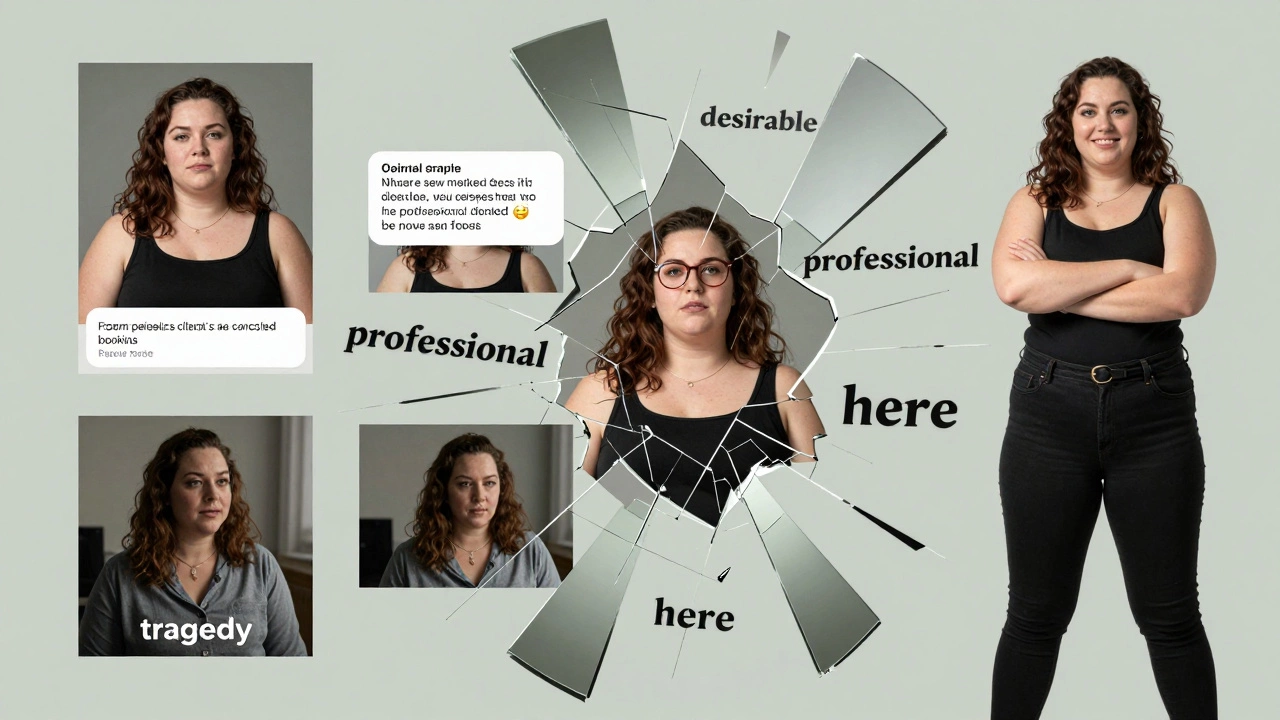
Anti-fatness isn’t just about aesthetics. It’s a system. It shows up in how clients cancel bookings because a worker "doesn’t match the profile." It shows up in how platforms ban fat workers for being "too risky" - even when they’ve got perfect reviews. It shows up in how even well-meaning activists talk about "empowering sex workers" while only lifting up thin, able-bodied, cis women. The message is clear: your body is the problem, not the law, not the stigma, not the violence you face every day.
What Does "Preference" Really Mean?
People say they "prefer" thin bodies. But preference implies choice. What if the choice was never really yours to begin with? Think about how many ads you’ve seen that say "no fat girls" - not "no fat clients," not "no fat people," but "no fat girls." That language isn’t neutral. It’s dehumanizing. It turns a body type into a rejection code. And it’s not just clients doing this. Many agencies, platforms, and even peer networks quietly enforce it. Fat workers are told to "try harder," "get in shape," or "change your photos" - as if their worth is tied to how closely they fit a mold that was never made for them.
There’s no data to prove thin sex workers are safer, more profitable, or more skilled. But the myth persists. Why? Because anti-fatness is profitable. It keeps the industry looking polished, predictable, and palatable to the mainstream. Fat bodies disrupt that illusion. They remind people that sex work isn’t a curated Instagram feed. It’s labor. And laborers come in all shapes.
The Erasure of Fat Sex Workers in Media
When documentaries are made about sex work, who gets shown? Usually, a thin, white, young woman with long hair and a smile. Rarely do you see a fat Black trans woman, a fat disabled worker, or a fat older woman who’s been doing this for 20 years. When fat sex workers are shown, it’s often framed as a tragedy - "she’s doing this because she has no other options." That’s not empowerment. That’s pity dressed up as journalism.
There are fat sex workers in Paris who run their own businesses. They set their own rates. They have loyal clients. They don’t apologize for their bodies. But you won’t find them on the front pages of "sex work exposés." You won’t hear them on podcasts that claim to be "authentic." They’re pushed to the margins - not because they’re less capable, but because their existence challenges the narrative that sex work is only valid when it looks a certain way.
How Anti-Fatness Hurts Everyone
Anti-fat bias doesn’t just hurt fat people. It hurts the whole industry. When you say only thin bodies are desirable, you’re saying that desire itself is limited. That’s not just unfair - it’s false. People are turned on by confidence, humor, skill, presence. Not just waist size. But the industry has been trained to believe otherwise. Clients learn to reject fat workers because they’ve been fed the same messages for decades: fat = unattractive = unworthy of pleasure.
And when fat workers internalize this? They stop applying to agencies. They delete their profiles. They quit. The result? A smaller, less diverse workforce. Fewer options for clients who actually want to connect with people, not just body types. And a tighter, more exclusionary industry that claims to be about freedom but only lets in those who fit the mold.
Real Stories, Real Workers
There’s a worker in Lyon who goes by the name Lila. She’s 42, fat, and has been doing sex work for 14 years. She doesn’t use filters. She doesn’t edit her photos. She writes her own ads in French and English. Her rates are higher than most because she’s reliable, attentive, and doesn’t play games. Her clients come back - not because she’s thin, but because she’s real. She’s not on any "top list." No one writes about her. But she makes more than most of the influencers who post in lingerie with perfect lighting.
Another worker in Marseille, named Samira, is a single mother who does part-time work to pay for her daughter’s therapy. She’s fat. She has a chronic illness. She doesn’t hide it. She says: "I don’t need your pity. I need you to book me." She’s been turned down by three agencies because her photos "don’t fit the brand." She doesn’t cry about it. She just keeps working.
These aren’t exceptions. They’re the rule. But the rule is hidden.

The Role of Platforms and Policies
Most sex work platforms claim to be neutral. But their algorithms and moderation teams act like gatekeepers. Photos with visible stretch marks? Flagged. Ads that mention "curvy" or "plus size"? Often hidden from search results. Fat workers are told their profiles are "low quality" - not because of the content, but because of their bodies.
Some platforms have started adding "body diversity" options to their filters. But these are surface-level fixes. They don’t change the culture. They don’t stop clients from messaging workers with comments like, "Are you sure you’re fat?" or "Can you lose weight before we meet?" The system rewards compliance, not courage.
And then there are the ads. The ones that say "no fat girls" - posted openly, without consequence. Why? Because the law doesn’t protect against body-based discrimination in sex work. No one is held accountable. So it continues.
What Does Liberation Look Like?
Liberation isn’t just decriminalization. It’s not just safer working conditions. It’s also dismantling the idea that some bodies are more deserving of pleasure than others. Liberation means a fat sex worker can post a photo of her body, her smile, her space - and get booked without someone asking if she’s "really" fat or if she’s "trying to be sexy."
It means platforms stop using "aesthetic" as a reason to censor. It means agencies stop pushing workers to change their bodies to get work. It means clients learn to see people, not proportions.
And it means the rest of us - the allies, the journalists, the activists - stop pretending that we’re fighting for all sex workers while only lifting up the ones who look like us.
There’s a reason you don’t see many fat sex workers on Instagram. It’s not because they don’t exist. It’s because they’re told to stay invisible. But they’re still here. Working. Earning. Surviving. And refusing to disappear.
Next time you see an ad for
And if you’re a fat sex worker reading this - you’re not broken. You’re not too much. You’re not wrong. You’re doing the work. And you deserve to be seen, paid, and respected - exactly as you are.
There’s a growing network of fat sex workers in France who share tips, safety checks, and client lists. They don’t advertise. They don’t need to. They trust each other. And they’re building something no algorithm can delete - community.
One of them posted this last week: "I don’t need your approval to be desirable. I just need you to pay me."
That’s the real revolution.
And it’s already happening - quietly, fiercely, and without permission.
There’s a worker in Montmartre who calls herself Zscort paris. She doesn’t use filters. She doesn’t smile in her photos. She just lists her services, her rates, and her boundaries. She’s been doing this for five years. She’s never been reported. She’s never been banned. And she’s never apologized for her body. She doesn’t need to. Her clients know the truth: she’s not a fantasy. She’s a professional. And she’s not going anywhere.